I get hotter everyday, can’t wait for tomorrow
“I get better every day, I can’t wait for tomorrow”
A solo exhibition by Lera Smirnova
Filet crochet, photography, video
Design: Anna Gordeychuk
Video: Sasha
Hideout, 28 August — 1 October 2026
Lera Smirnova’s solo project brings together textile objects, photography, and video. At its core are knitted pieces featuring ironic phrases in English. “I get hotter everyday. Can’t wait for tomorrow, ” which gives the exhibition its title, is at once a knitted statement, a meme, and an incantation. The exhibition unfolds in the gap between the language of constant digital self-expression and a material historically expected either to remain silent or to repeat someone else’s words: “home sweet home.”
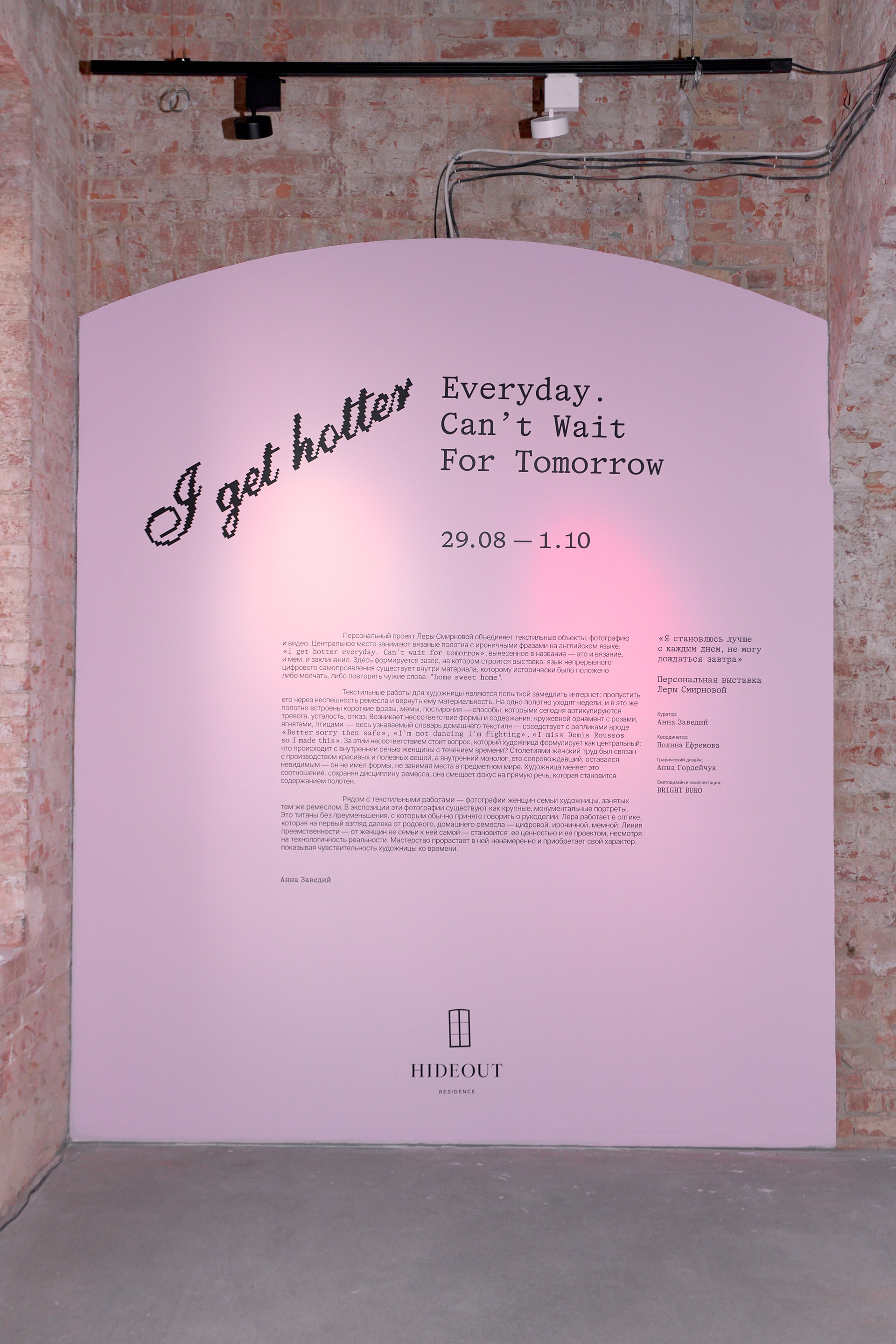
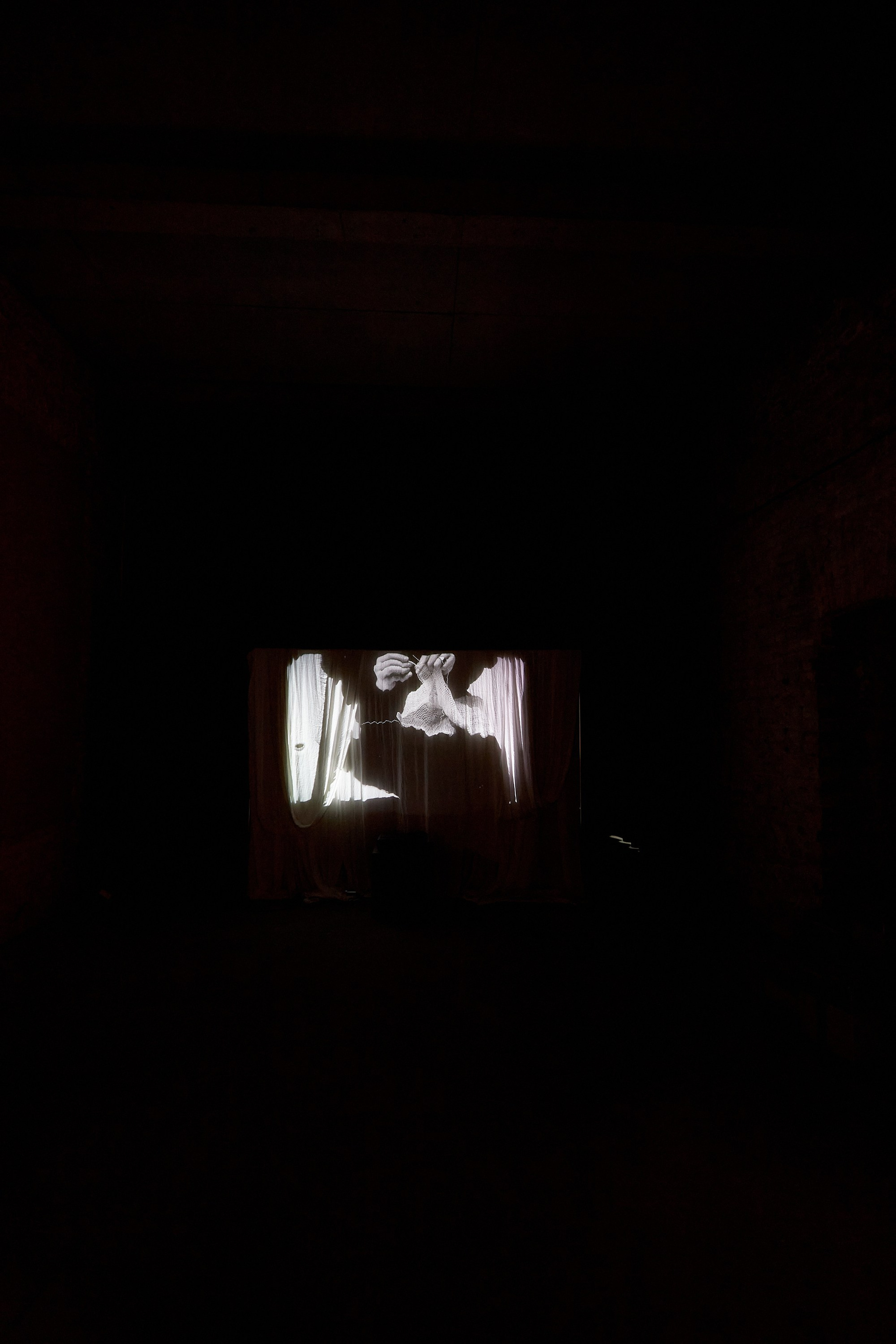
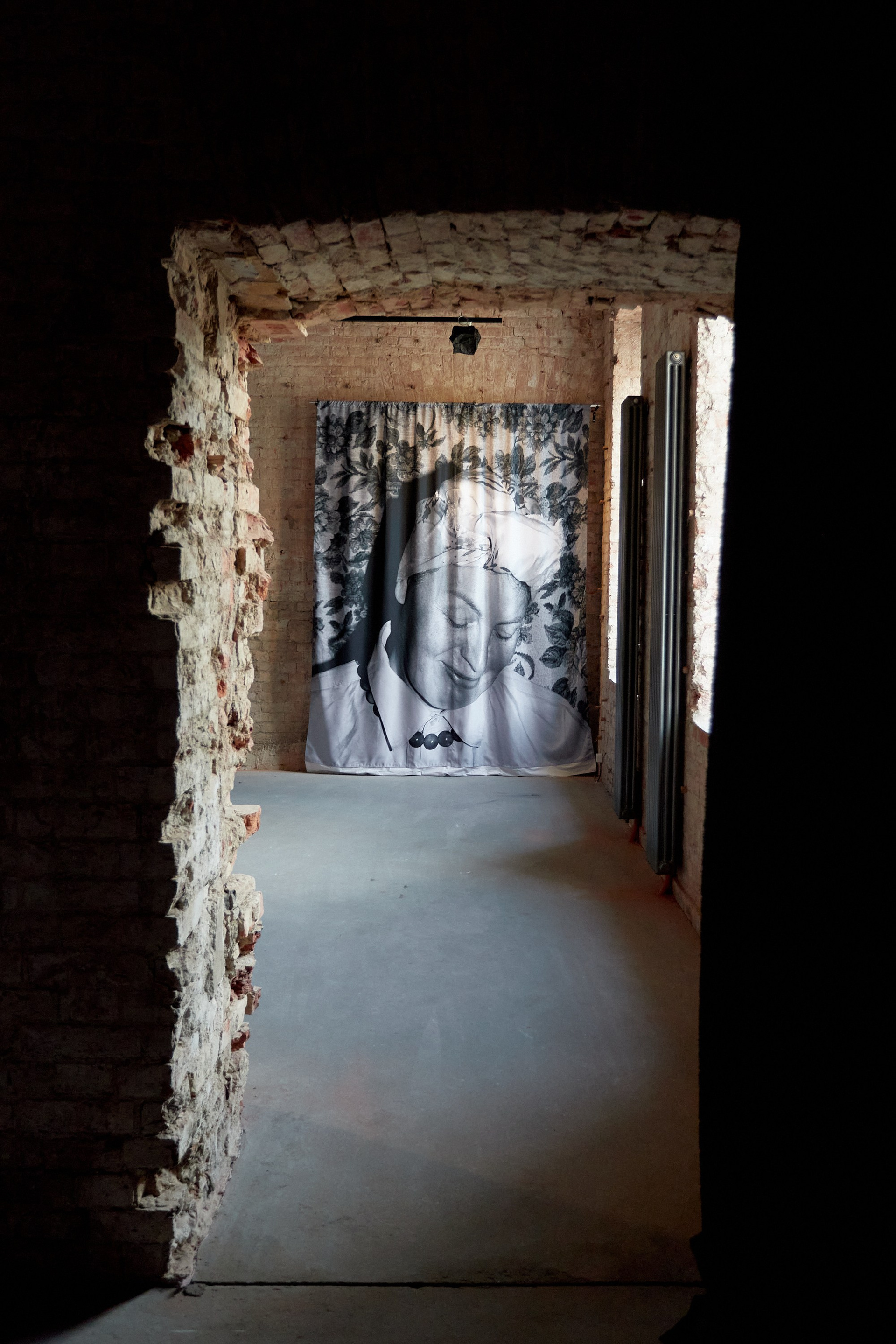
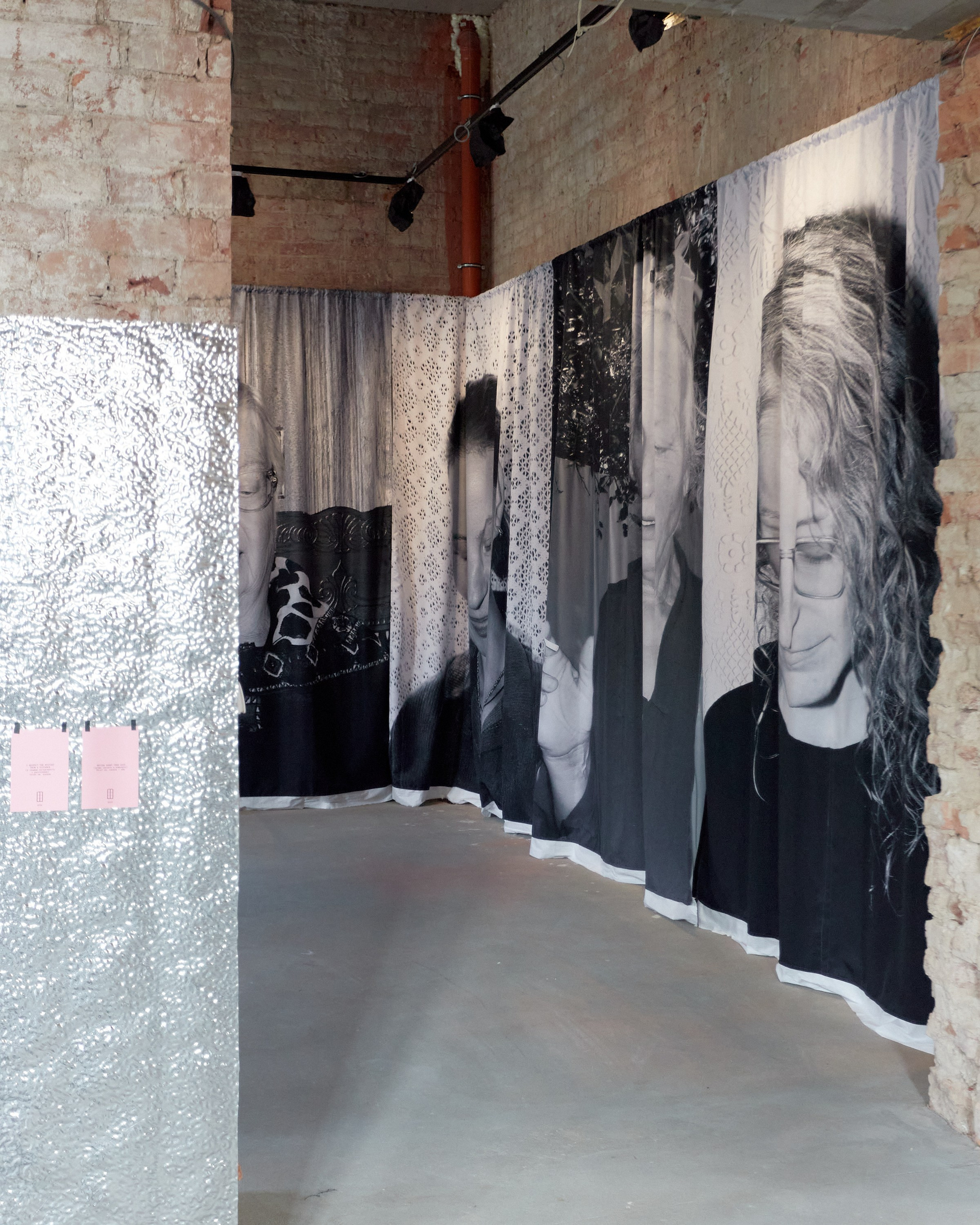

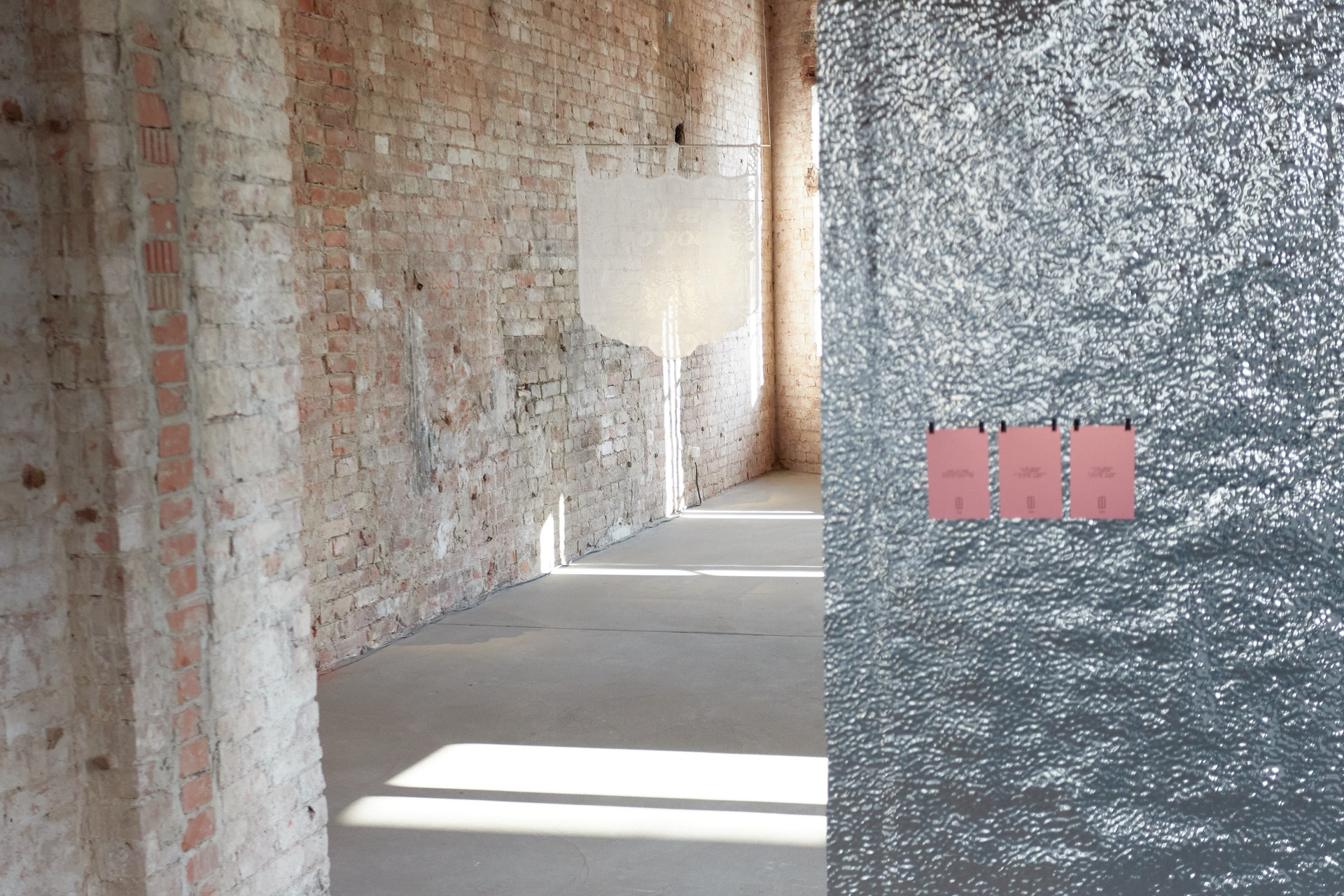
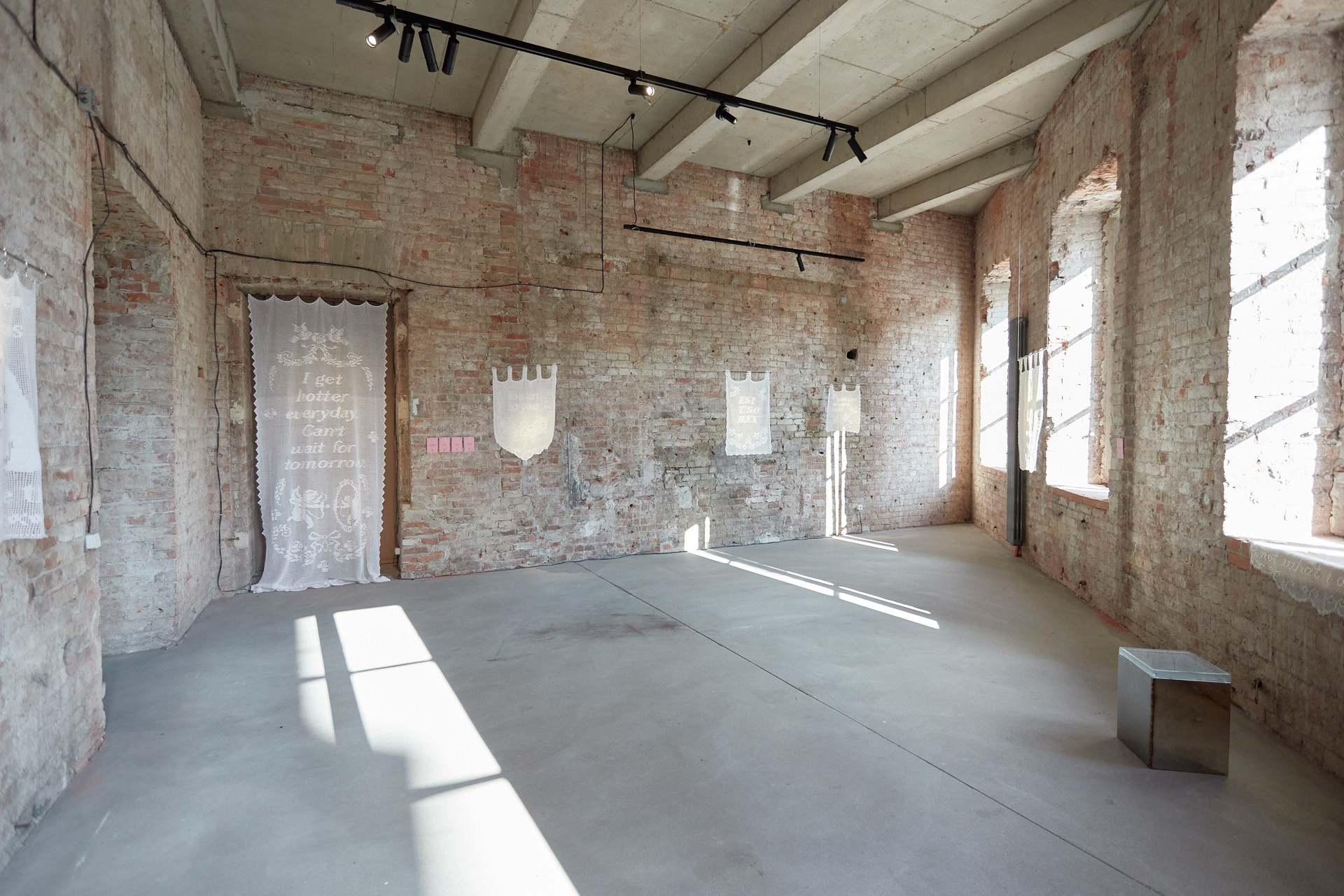
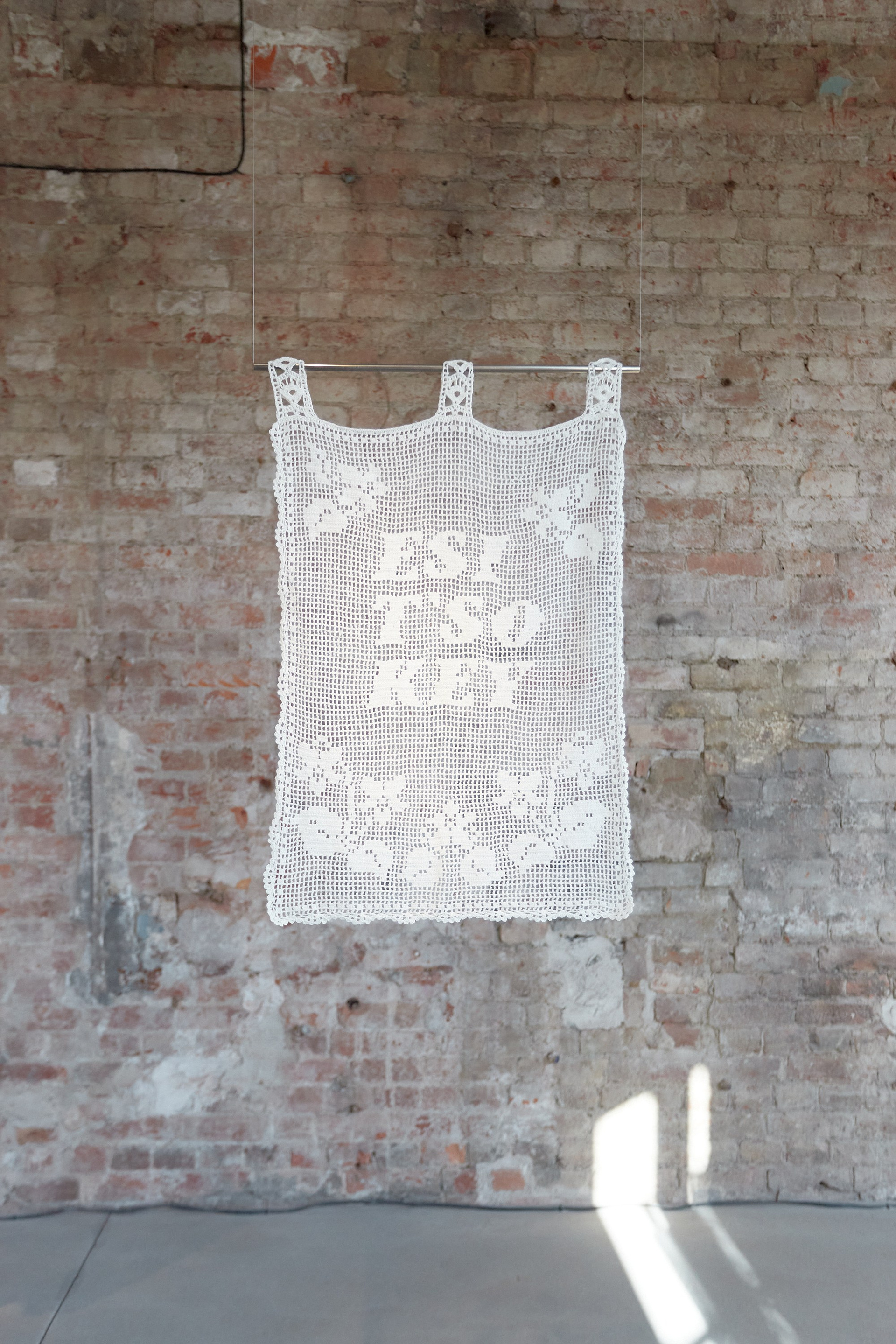
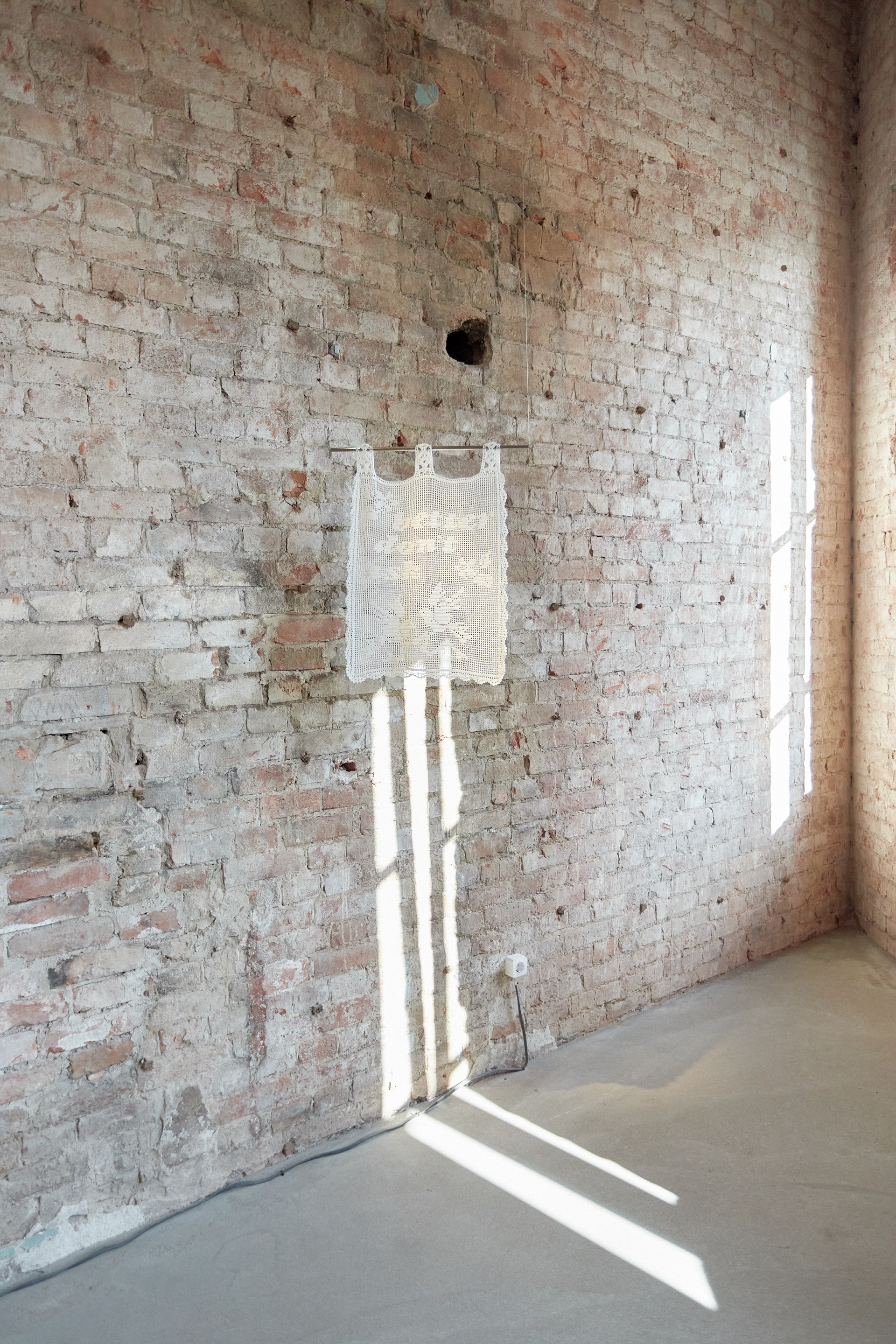
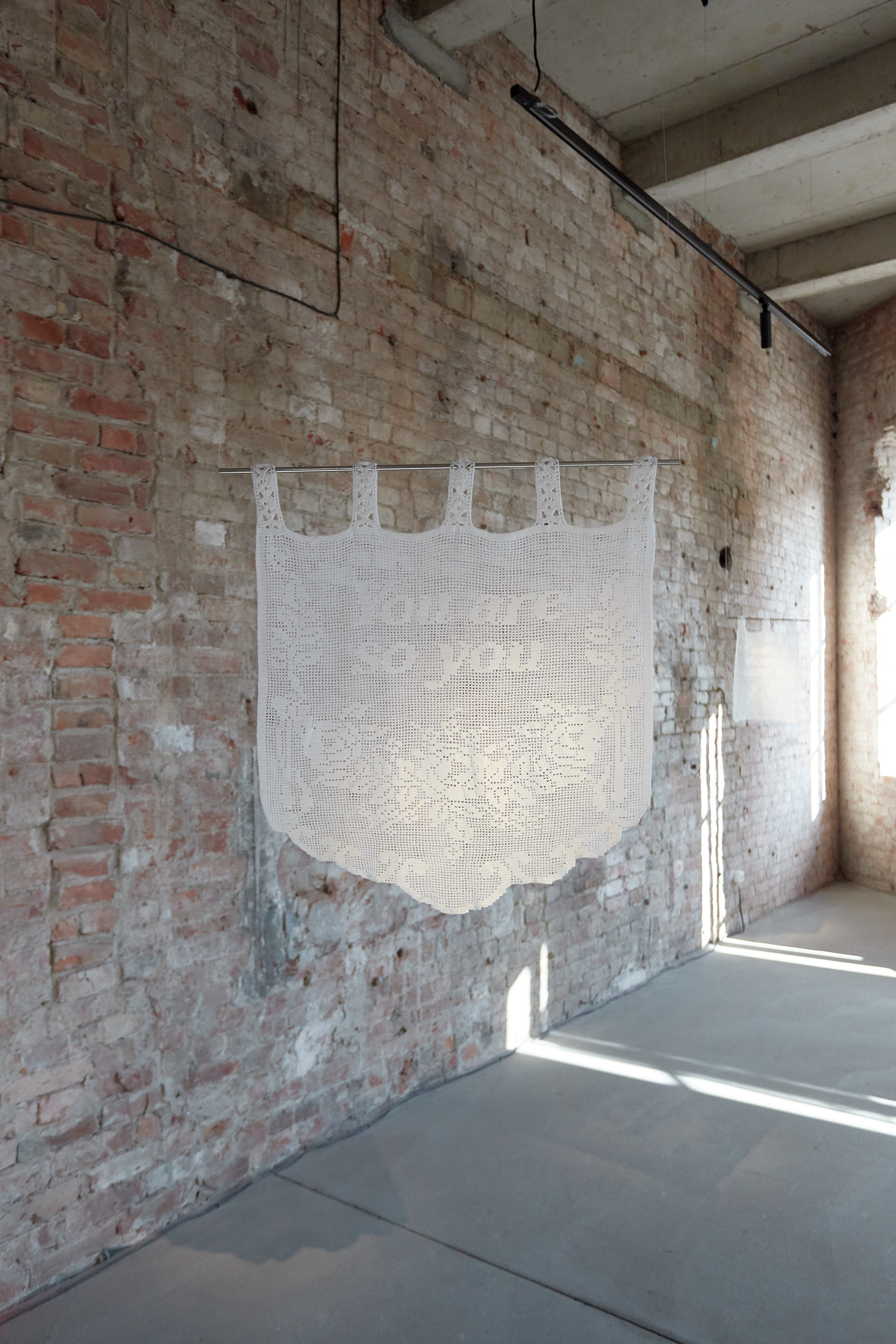
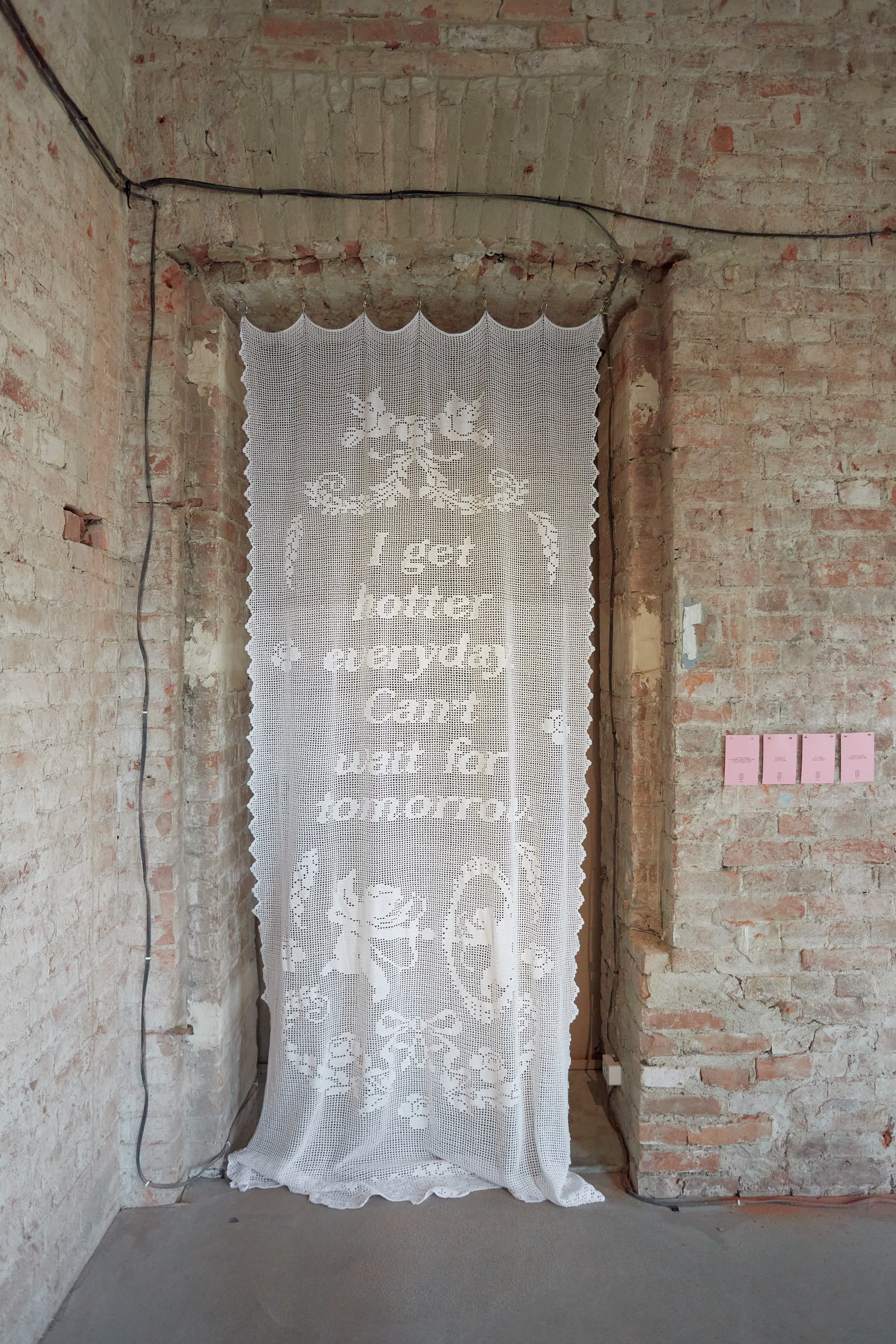
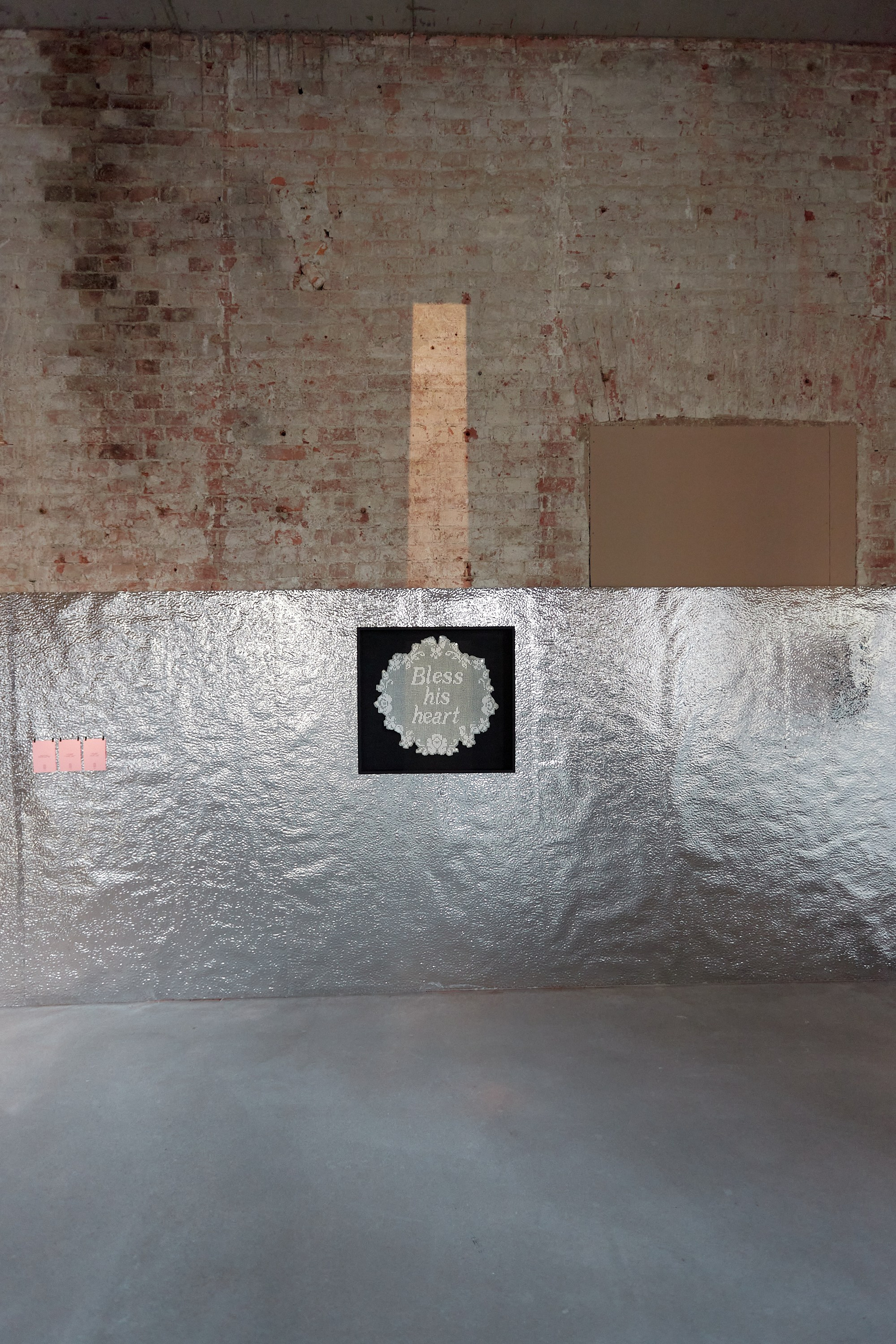
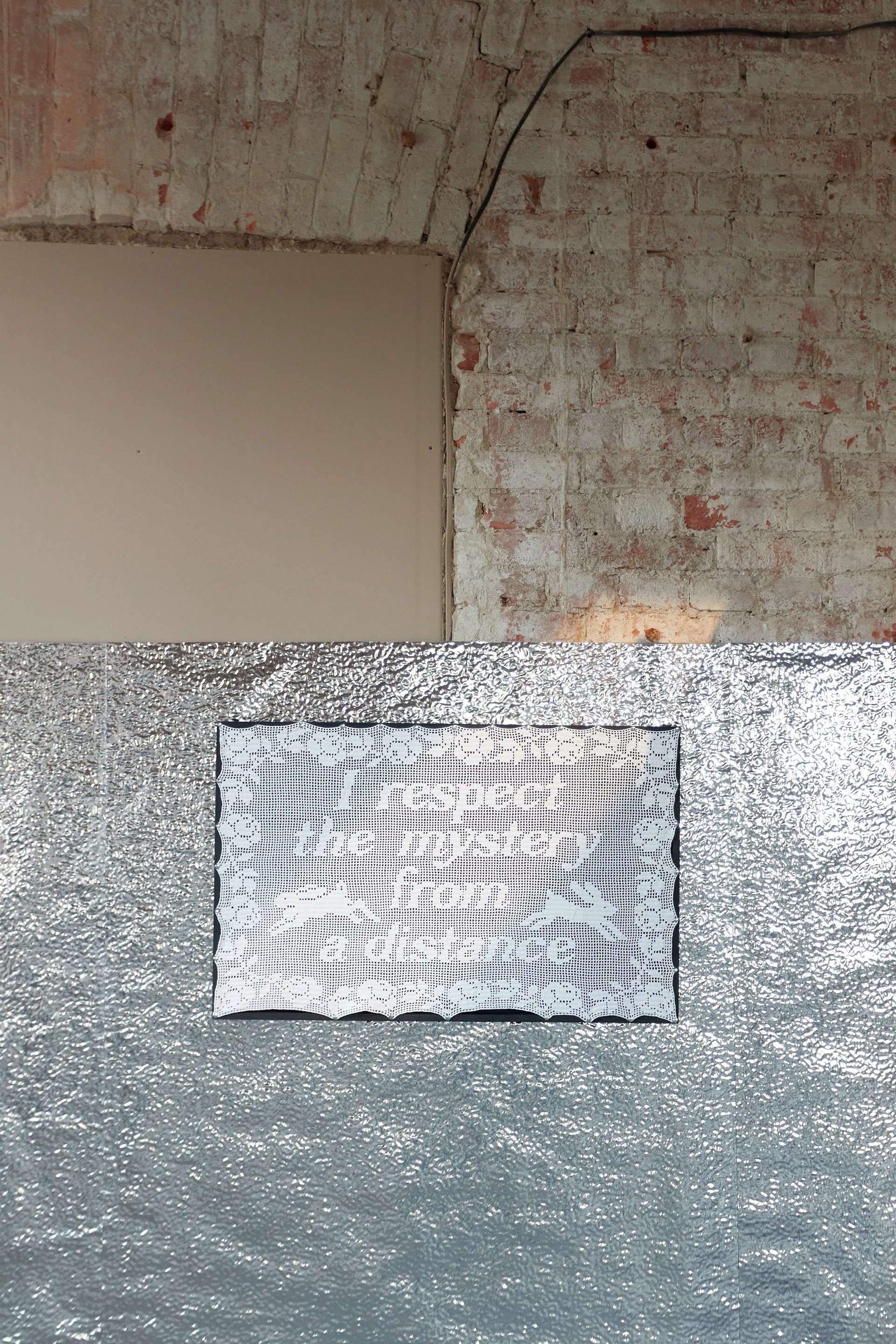
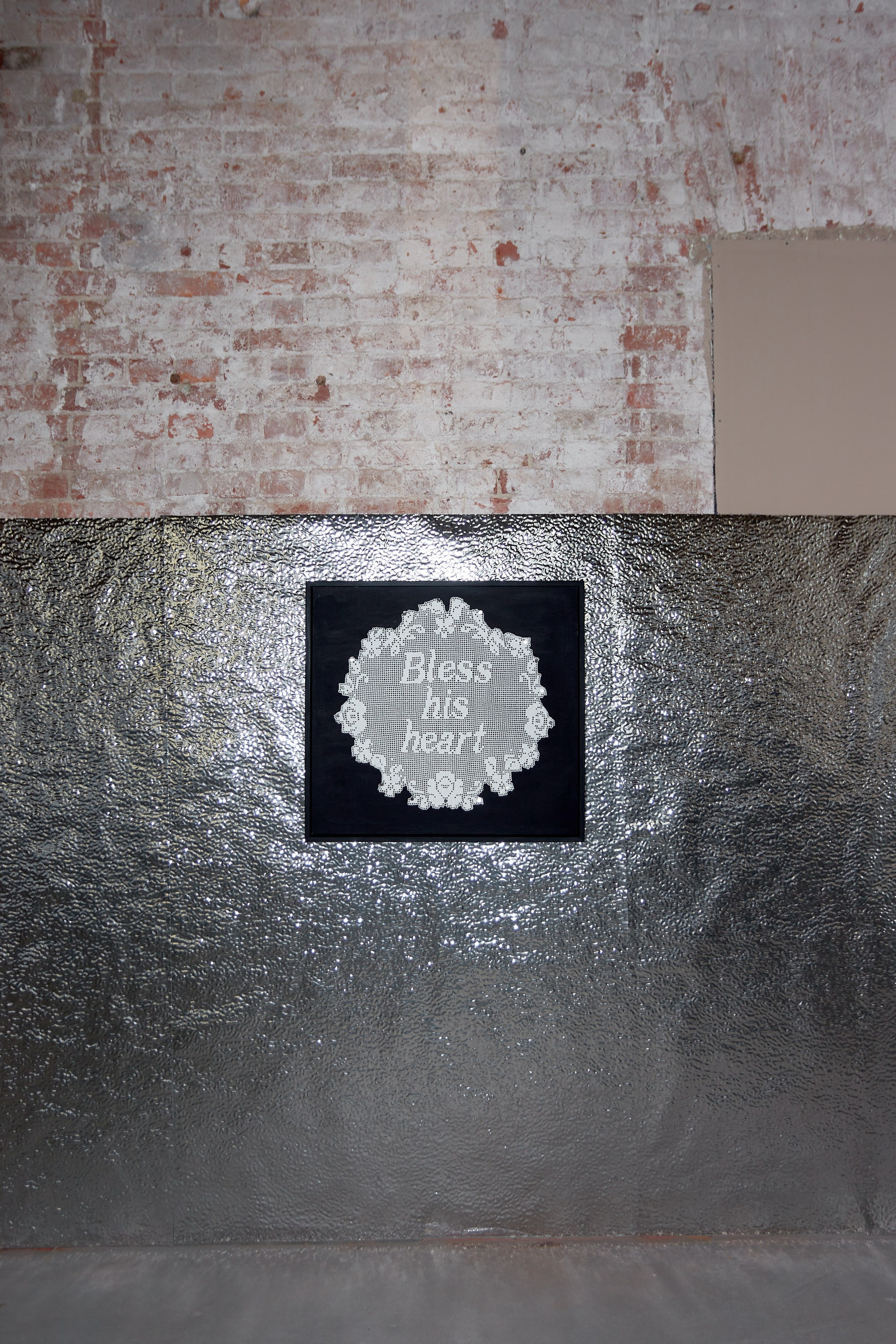
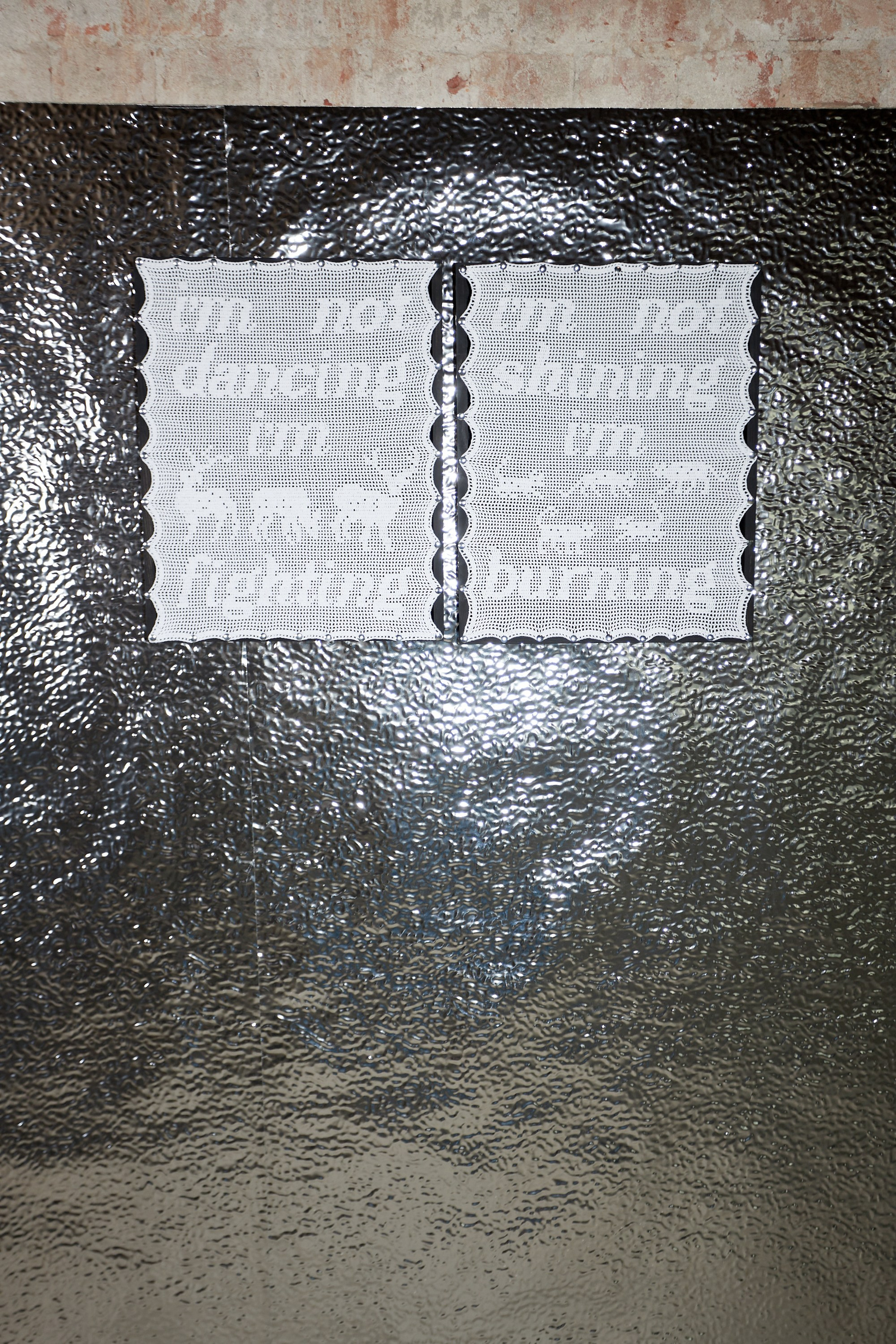
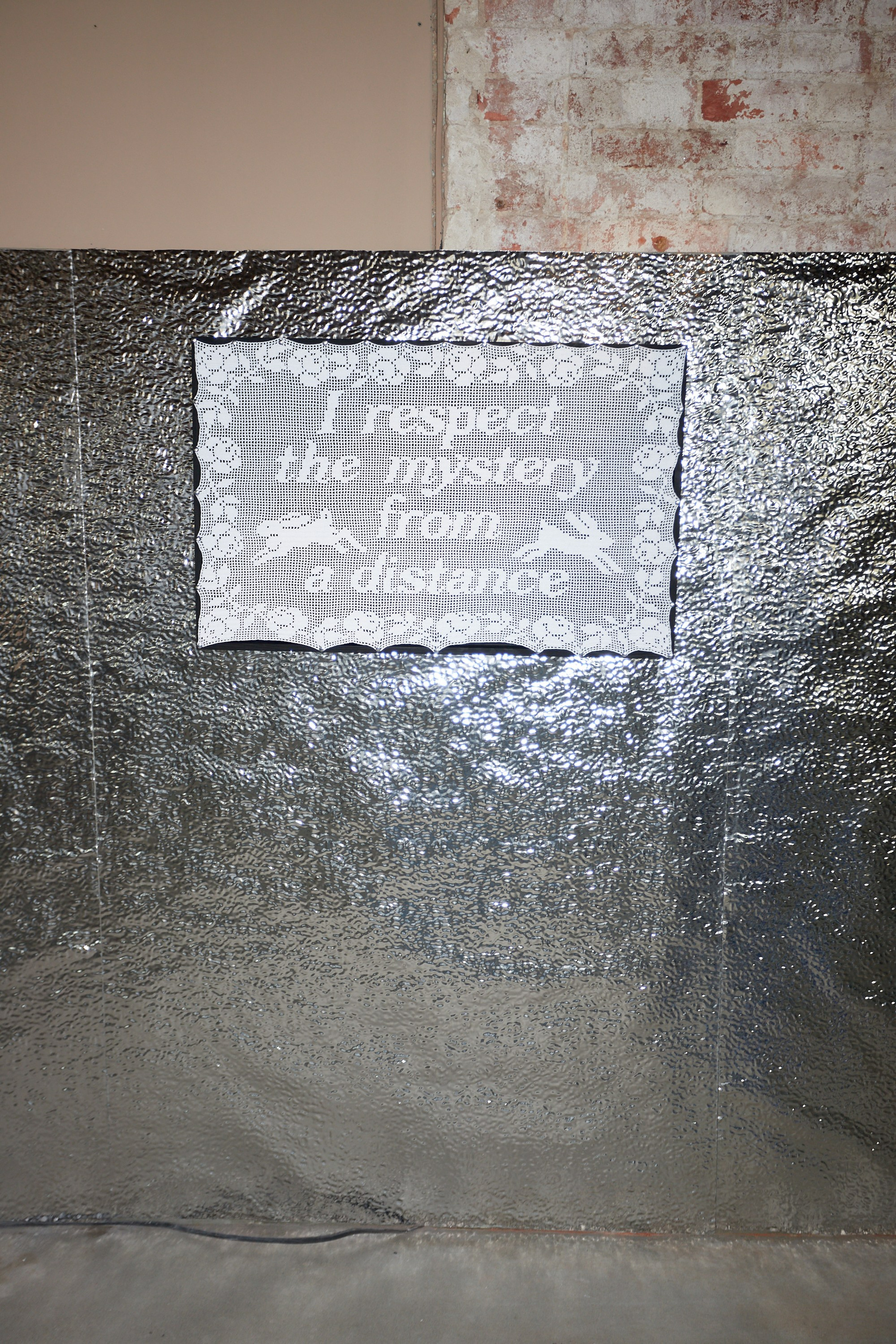
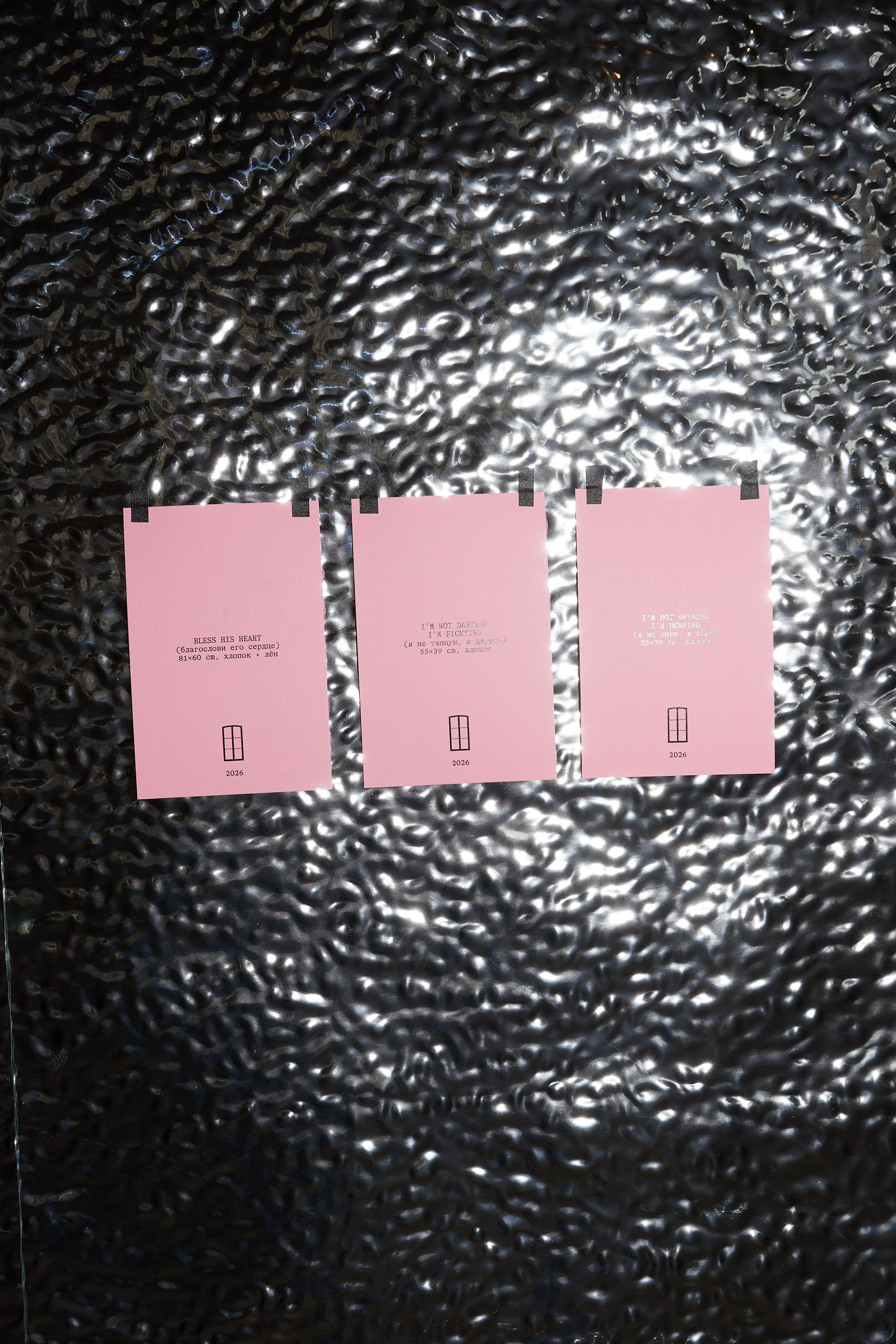
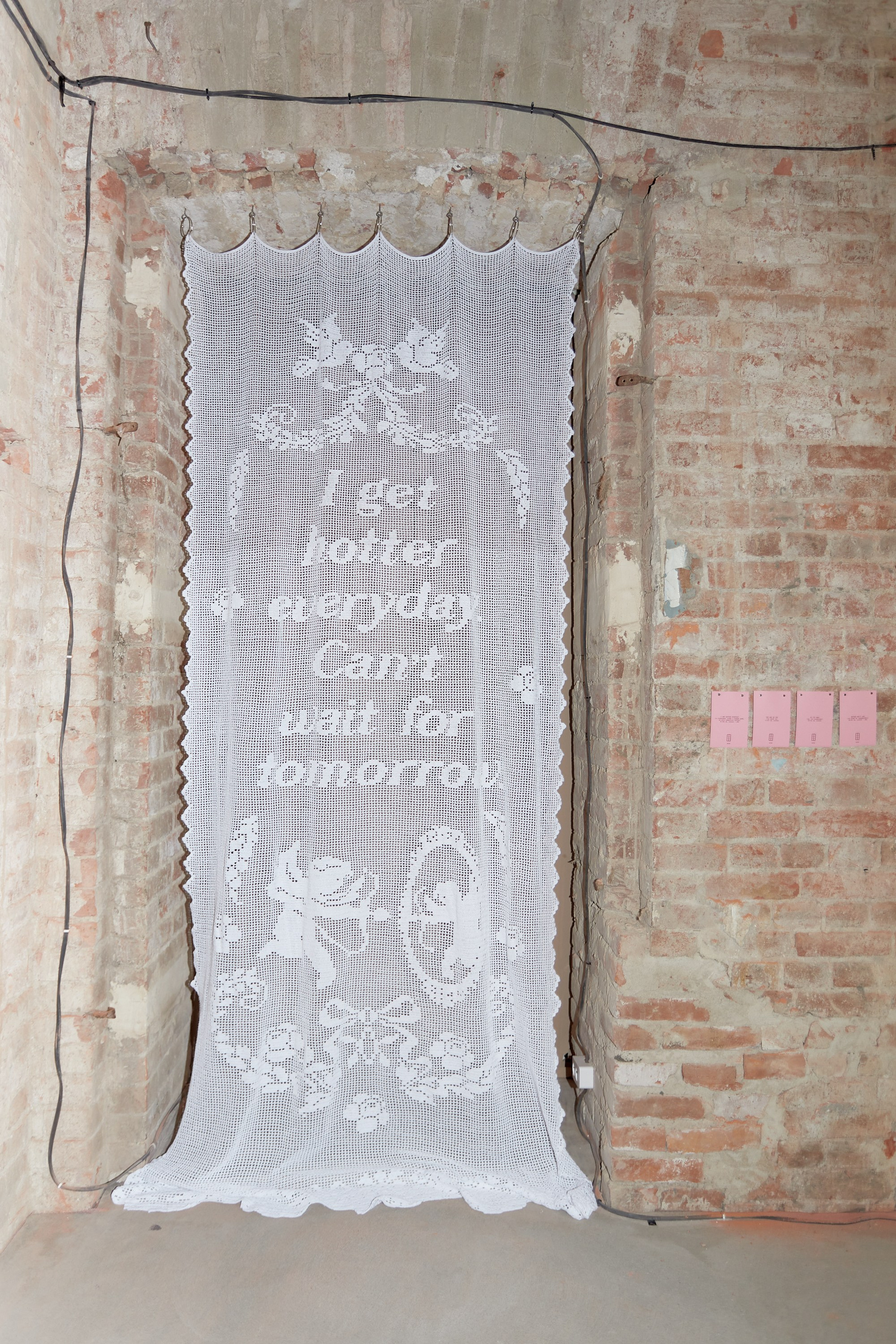
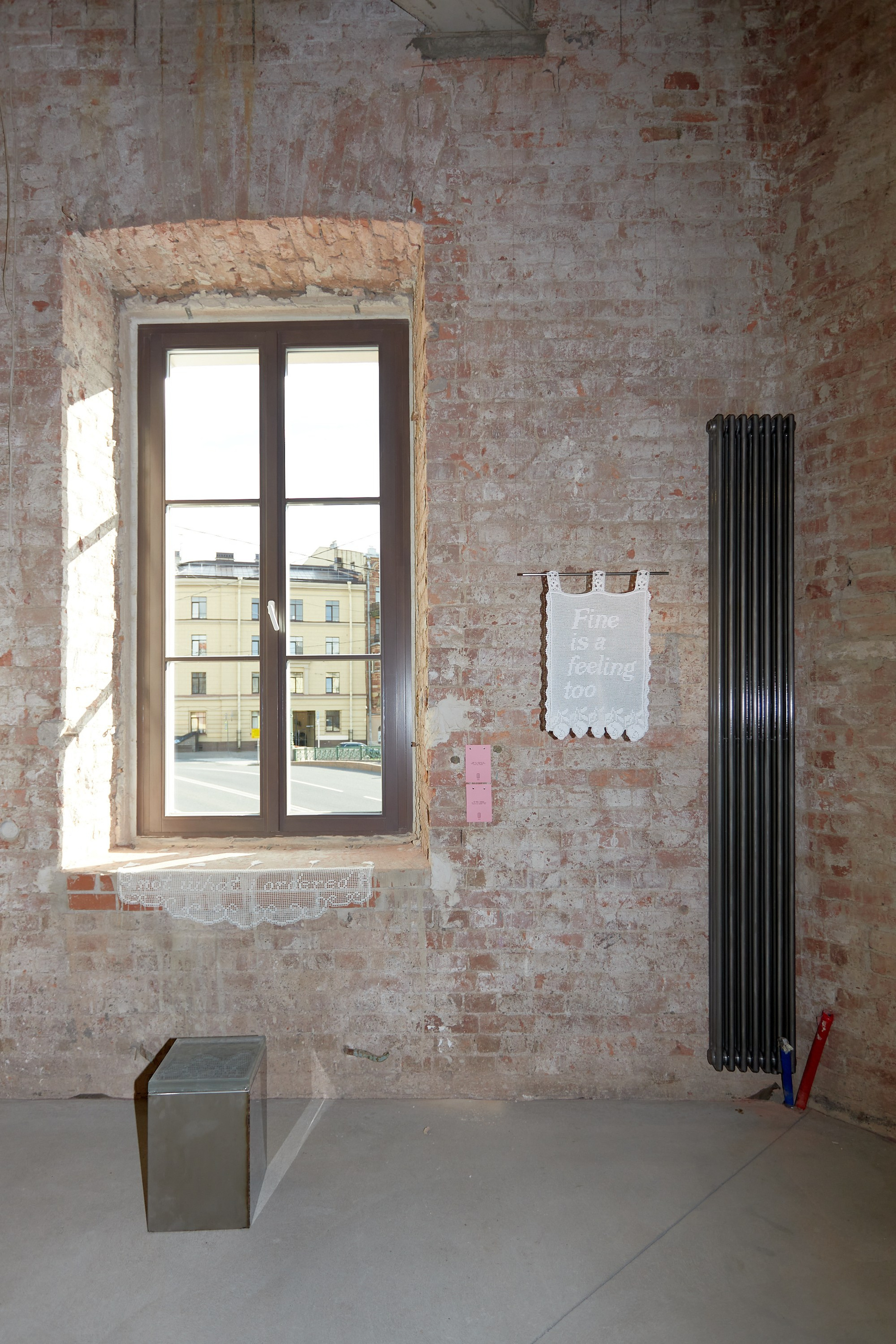
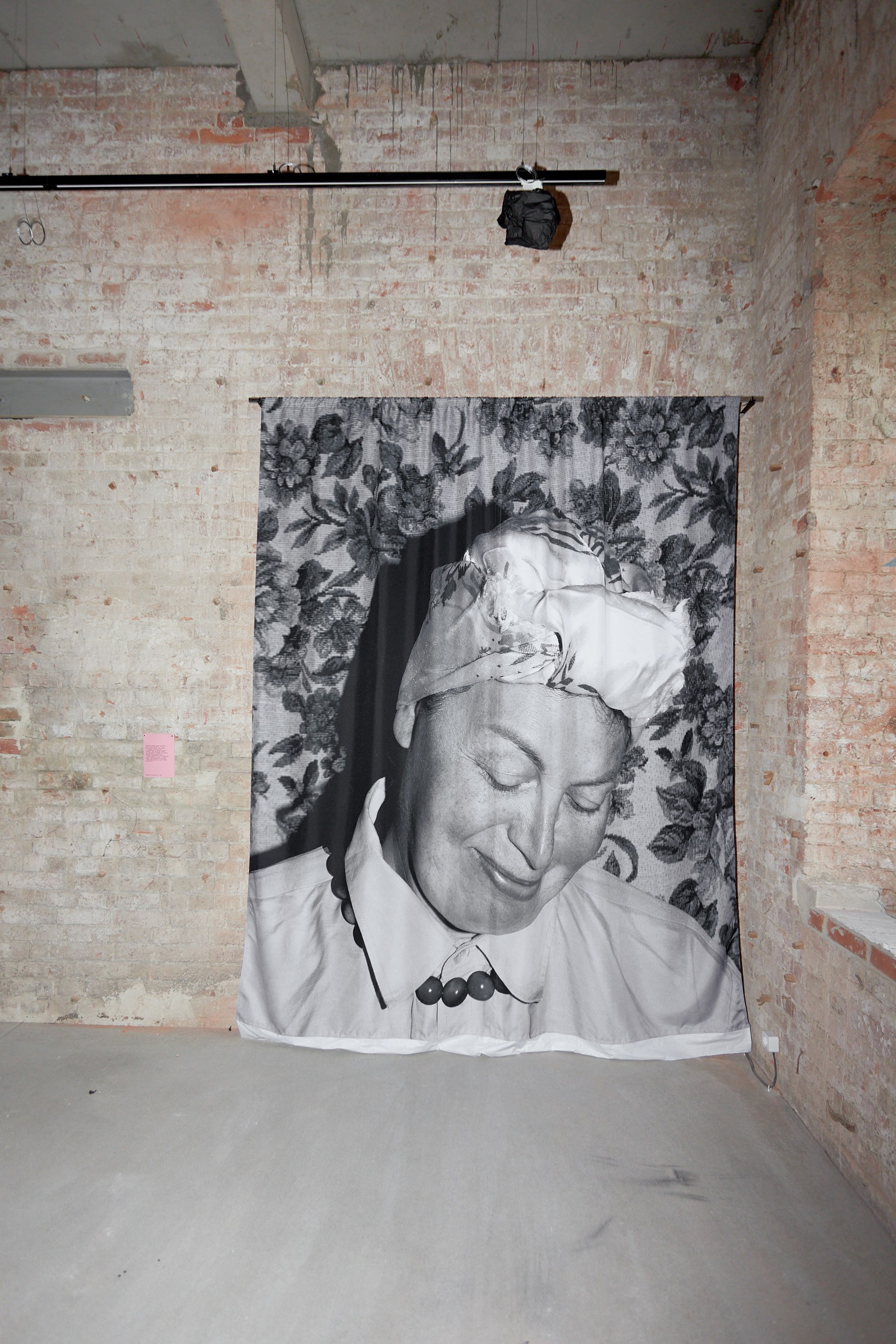
Lera Smirnova’s solo project brings together textile objects, photography, and video. At its core are crocheted panels featuring ironic phrases in English. “I get hotter everyday. Can’t wait for tomorrow, ” which gives the exhibition its title, is at once crochet, a meme, and an incantation. The exhibition takes shape in the gap this creates: the language of constant digital self-expression inhabits a material historically expected either to remain silent or to repeat someone else’s words: “home sweet home.”
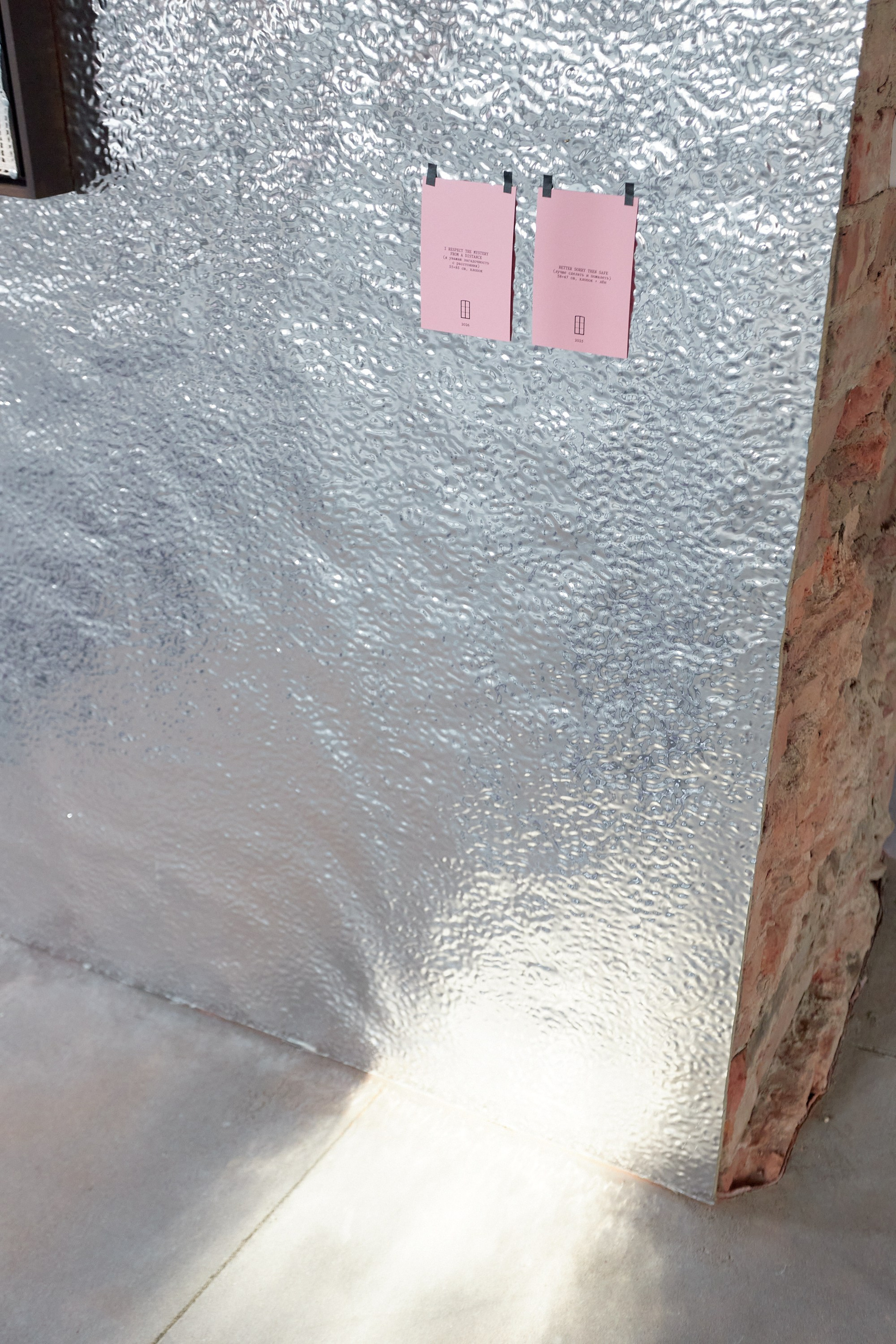
For the artist, these textile works are an attempt to slow down the internet: to draw it through the unhurried process of craft and restore its materiality. Each panel takes weeks to make, yet woven into it are short phrases, memes, and post-irony—the means through which anxiety, exhaustion, and refusal are articulated today. A dissonance emerges between form and content: lace patterns of roses, lambs, and birds—the familiar vocabulary of domestic textiles—sit alongside statements such as “Better sorry then safe, ” “I’m not dancing i’m fighting, ” and “I miss Demis Roussos so I made this.”
Behind this dissonance lies a question the artist identifies as central: what happens to a woman’s inner speech over time? For centuries, women’s labour was bound to the production of beautiful and useful things, while the inner monologue accompanying it remained invisible: it had no form and occupied no space in the material world. The artist shifts this relationship: retaining the discipline of craft, she turns the focus towards direct speech, which becomes the substance of the panels.
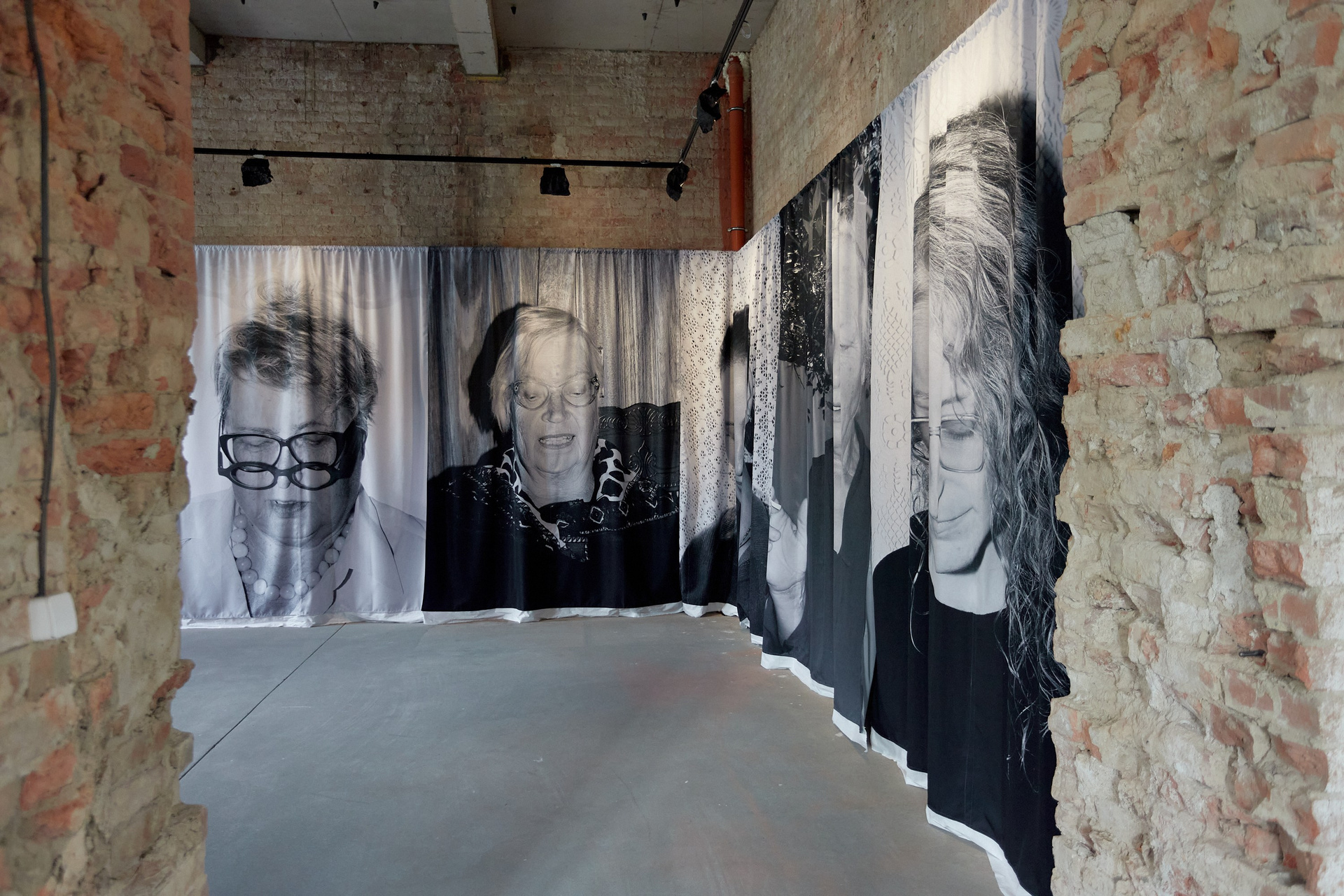
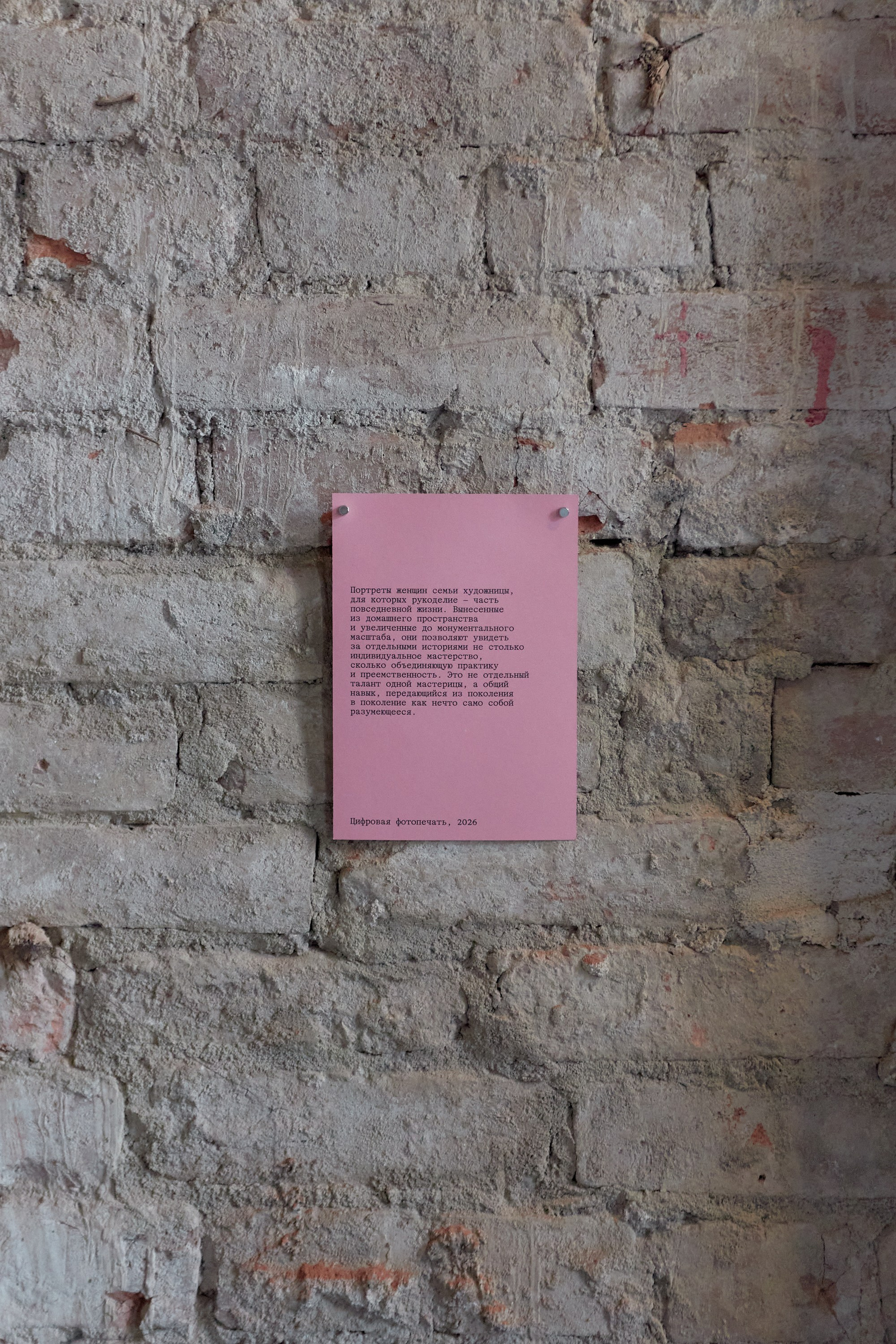
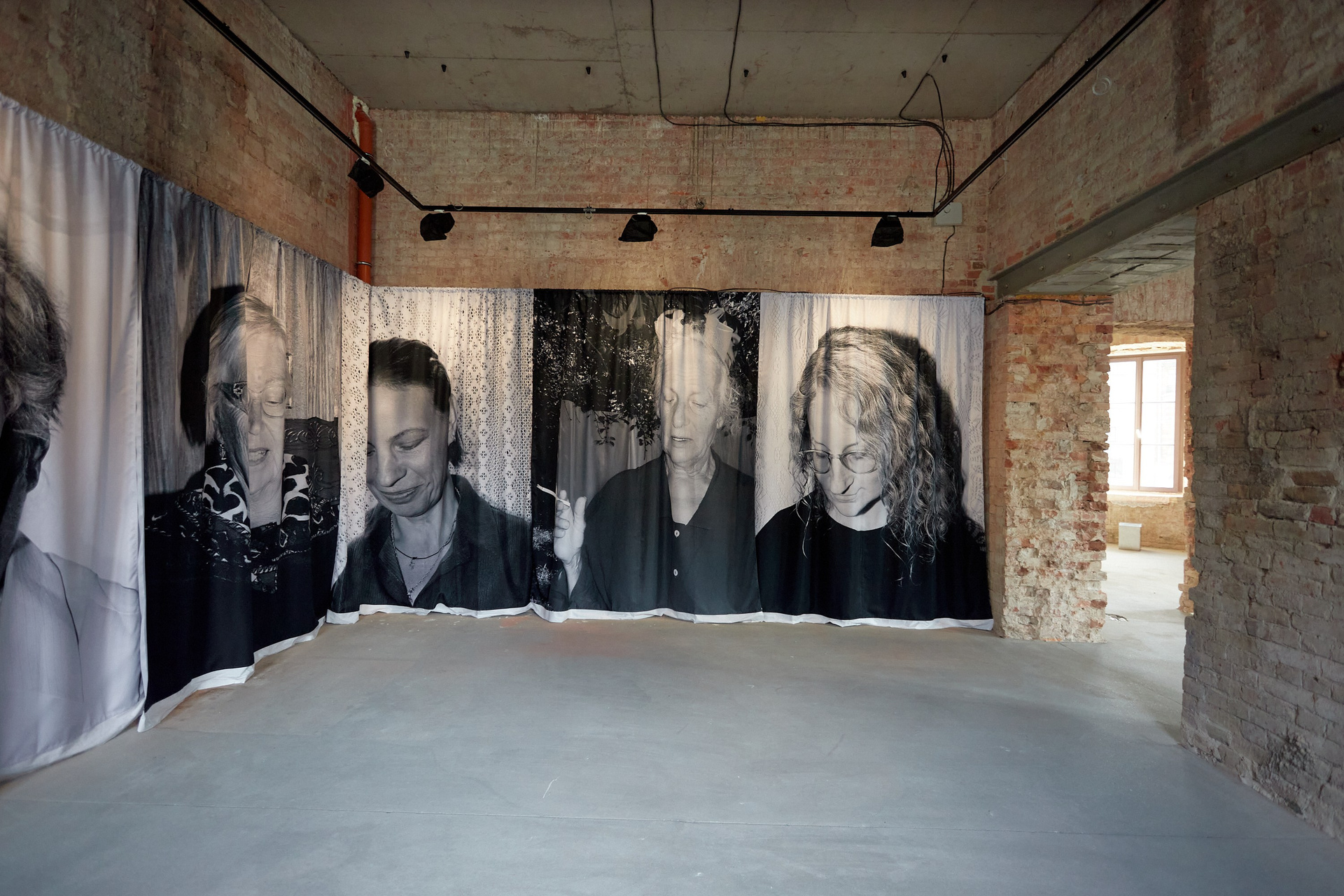
Alongside the textile works are photographs of women in the artist’s family practising the same craft. In the exhibition, these photographs take the form of large, monumental portraits. These women are titans, presented without the diminishment that so often accompanies discussions of needlework.
Lera approaches her work through a digital, ironic, meme-inflected lens that at first seems far removed from an inherited domestic craft. Yet the line of continuity—from the women in her family to the artist herself—becomes both something she values and the subject of her project, even within a reality shaped by technology. Craft takes root in her almost unbidden and assumes a character of its own, revealing the artist’s sensitivity to her time.